[02]
Scrolly Poetry is an immersive, scroll-based website that redefines how we experience poetry, focusing on the poem "Ode to Aphrodite" by Sappho.
By placing the act of scrolling at the heart of the experience, it offers a new encounter with the text: stepping beyond the written page into a tangible 3D environment. Users are invited to step inside the scene, watching the words turn into reality.
The project visualizes Sappho's transformation and the arrival of Aphrodite as a "Fellow-Fighter" — not in imagination, but right before your eyes.
By using spatial design, ancient poetry is transformed into a present-tense event. It offers a new way to understand the poem: not through analysis, but by entering its world.
| [TYPE] | IMMERSIVE WEB EXPERIENCE / CODE | |
| [YEAR] | 2026 | |
| [TOOLS] | UNITY, GEMINI (CODING), MESHY AI |
The website is structured as a scrollytelling experience, where scrolling serves as both the timeline and the narrative arc.
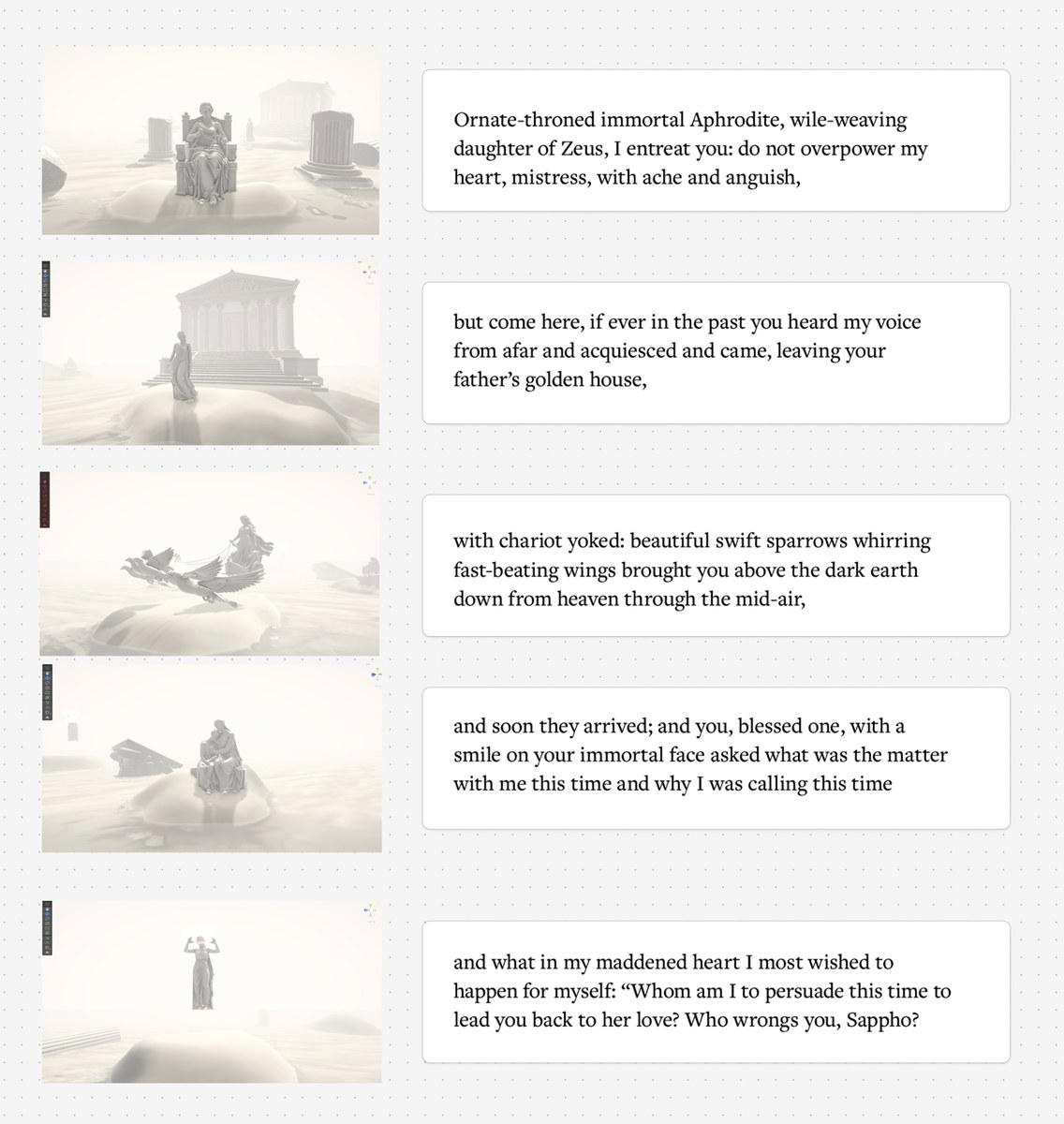
Each "stop" represents a stanza from the poem, with the journey divided according to the original text. Every stanza is realized as a unique 3D scene, depicting a distinct phase of the story. Together, these scenes weave into a cohesive, complete narrative.
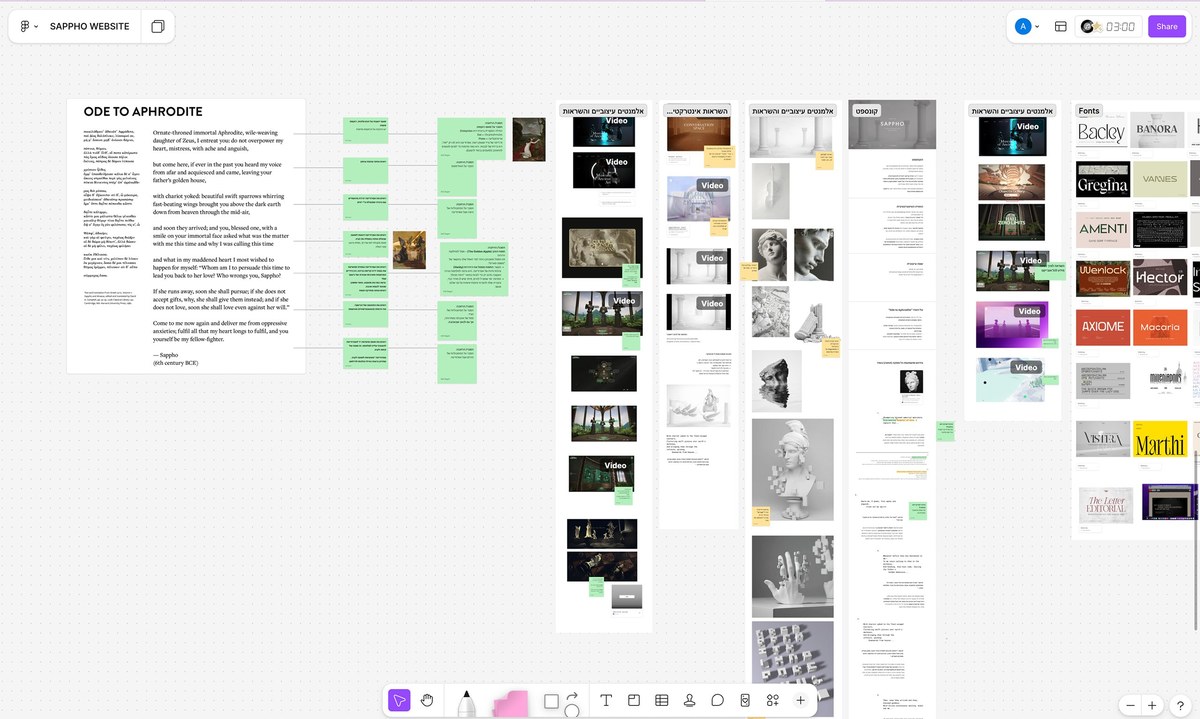
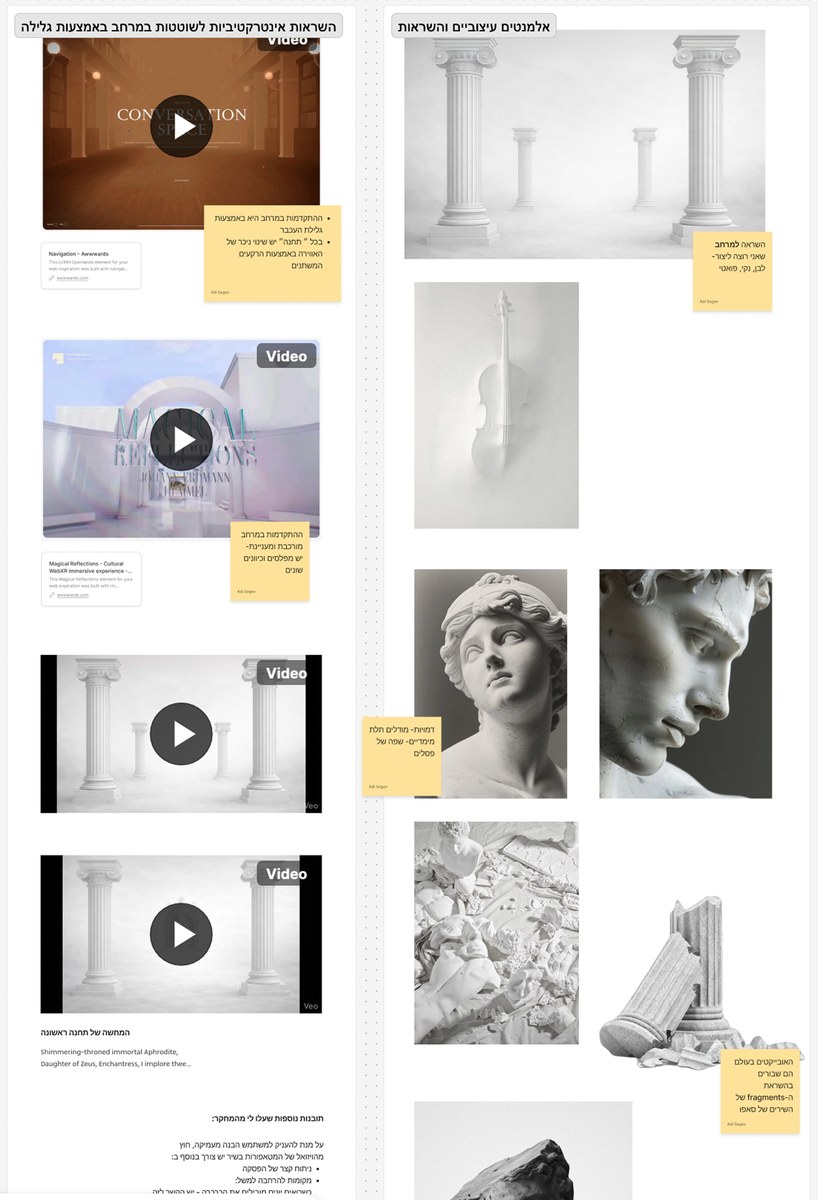
Every project I work on starts with a structured research phase in FigJam. My process is always about asking “why” for every inspiration I collect — extracting the specific insights that will drive my design.
This approach, shown here in my workspace for Scrolly Poetry, helps me see the big picture and find the connections that build a solid concept.
In my design process, I sought to bridge the gap between ancient poetry and modern spatial design. I chose a minimalist, white 3D visual language where the space is as meaningful as the words themselves, reflecting the “breaths” and rhythmic pauses inherent in the poetry.
Inspired by the fragmented nature of Sappho’s poetry, I incorporated white, broken 3D objects into the environment. These elements turn the “brokenness” of the text into a spatial narrative that unfolds through the act of scrolling.
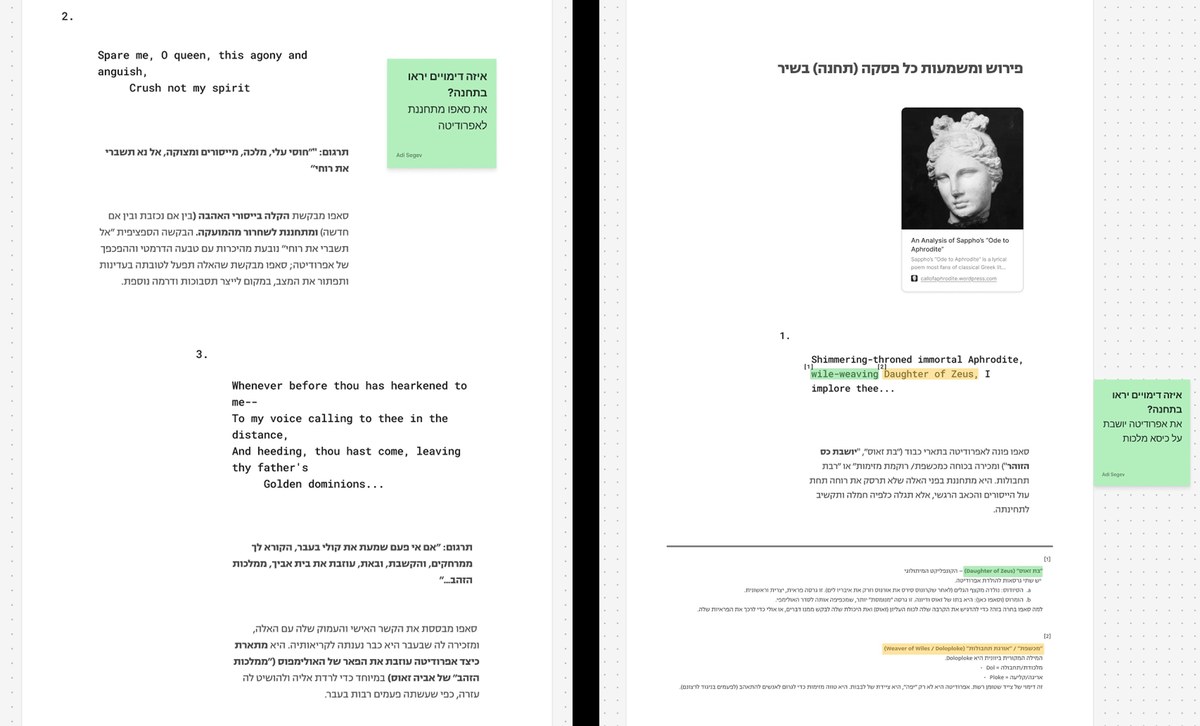
I conducted an in-depth analysis of the poem “Ode to Aphrodite,” treating each stanza as a “station” — a specific moment in the interactive experience.
By deconstructing the meaning, metaphors, and emotional subtext of every verse, I was able to bridge the gap between literature and design.
Only after fully interpreting the poem’s depth did I define the visual narrative for each stop, mapping out exactly what the user would encounter at every stage of the scroll.
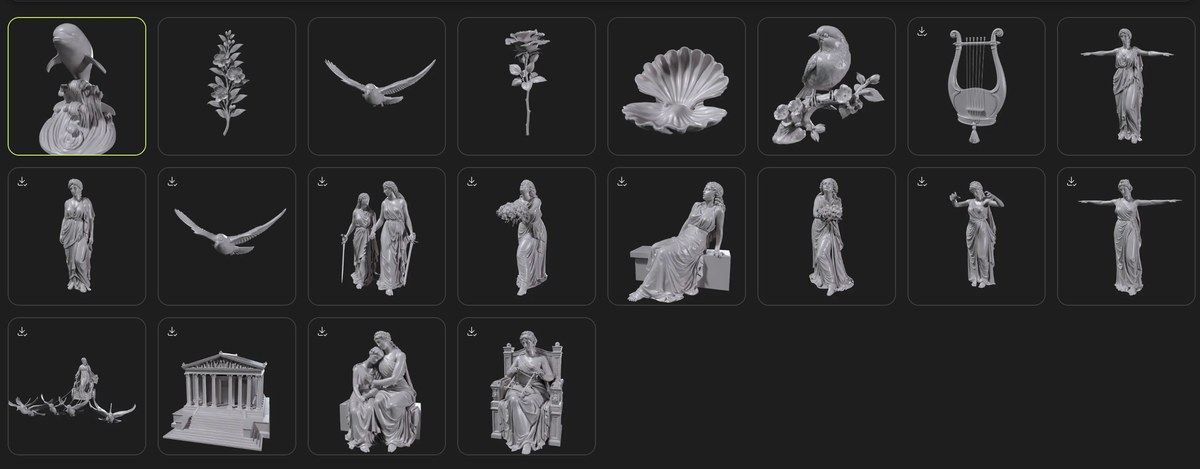
To bring each station to life, I developed a specialized AI-driven workflow for 3D modeling. I utilized Midjourney, Gemini, and ChatGPT to generate high-fidelity reference images based on my conceptual research.
These images were then transformed into 3D objects using Meshy AI, allowing me to maintain a consistent, minimalist aesthetic across the entire digital environment.
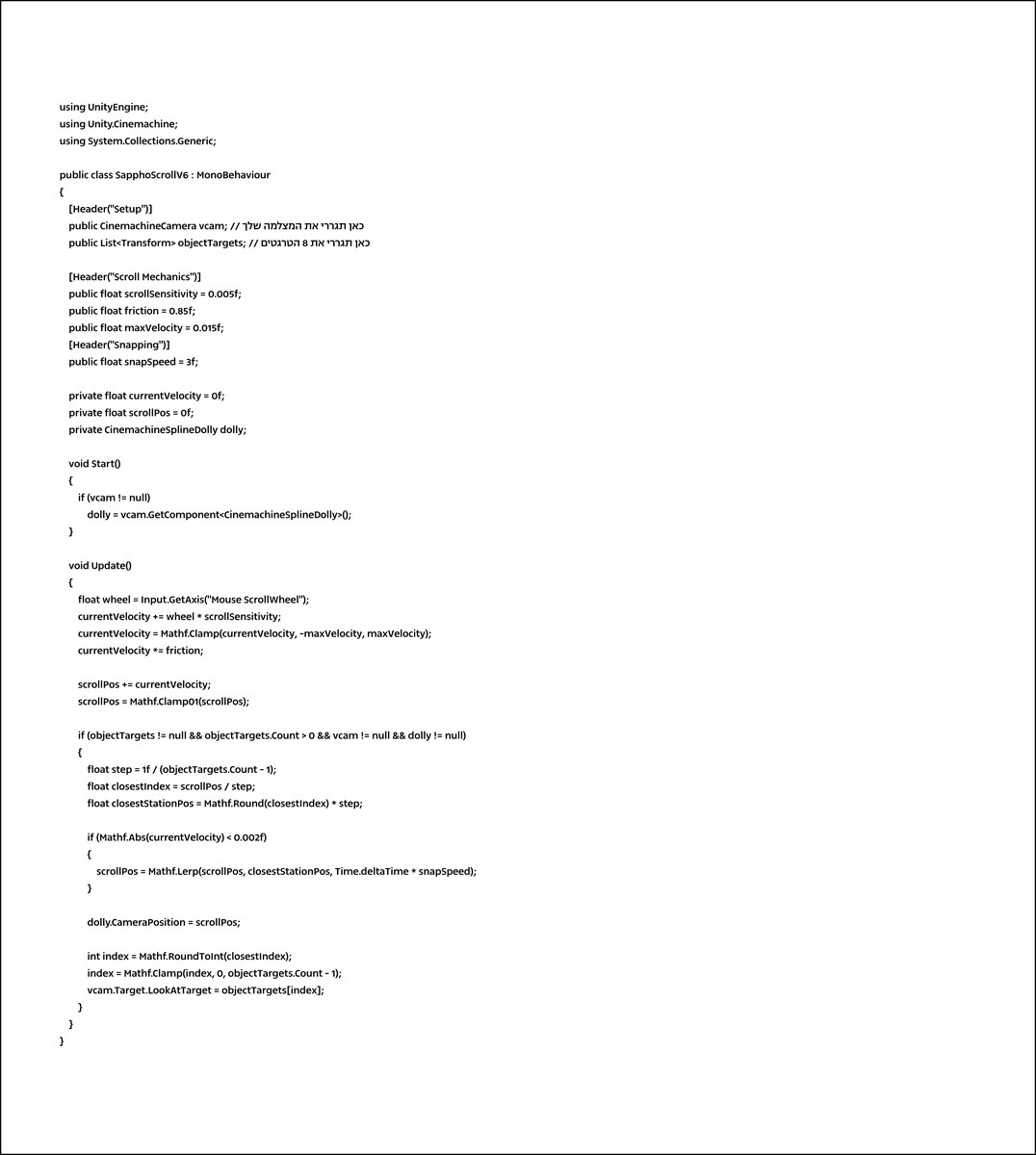
To provide a smooth and immersive exploration experience within the 3D space, I developed the SapphoScrollV6 script (with the assistance of Gemini AI). The system utilizes Unity’s Cinemachine Spline Dolly component to translate the user’s mouse scrolling into cinematic camera movement along a predefined Spline path.
To prevent rigid movement, I implemented soft physics mechanics involving friction and acceleration into the code. Additionally, the system features a smart ‘Snapping’ mechanism: once the user stops scrolling, the camera gently glides and locks onto the nearest statue (Target) on the path, automatically focusing its gaze directly on it.
The result is a navigation interface that feels natural, precise, and custom-tailored to the story of Sappho.